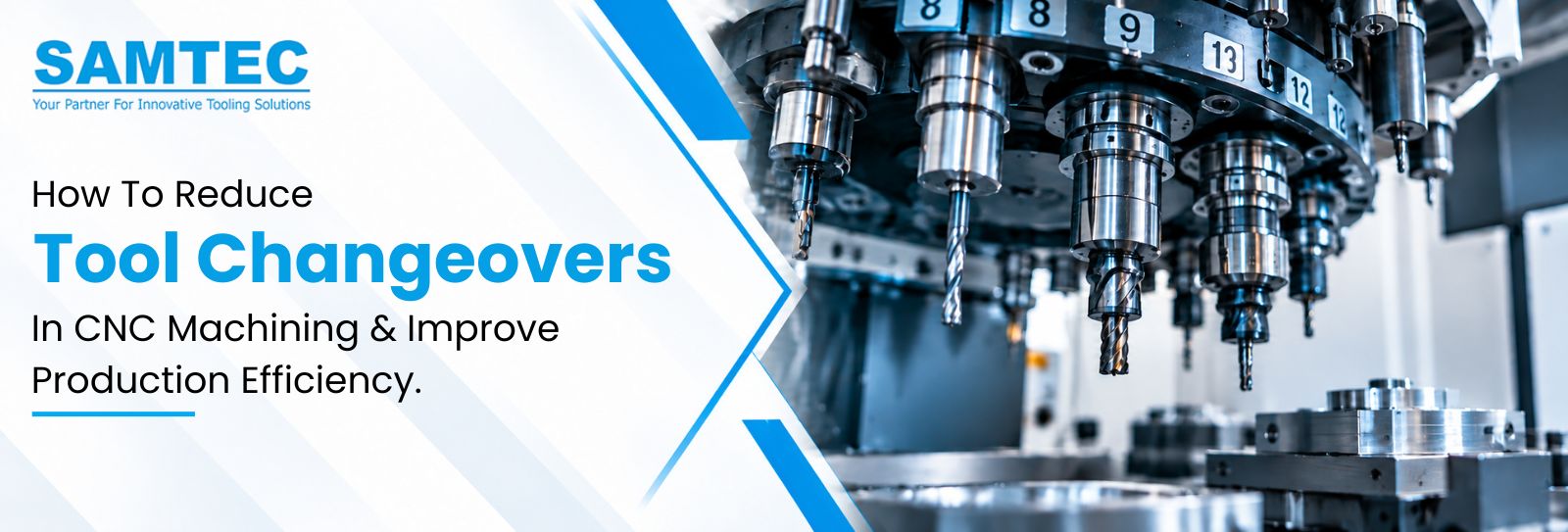
In modern CNC manufacturing, every minute of machine time matters. While cutting speed, feed rates and tool life often receive most of the attention, tool changeovers can also have a significant impact on overall production efficiency.
Frequent tool changes can increase non-cutting time, interrupt production flow and create additional setup requirements. For manufacturers handling high-volume or complex machining operations, reducing unnecessary tool changeovers can help improve machine utilization and production output.
The right tooling strategy—combined with proper tool selection, presetting and quick-change systems—can make CNC machining operations more efficient and consistent.
What Are Tool Changeovers In CNC Machining?
A tool changeover is the process of removing one cutting tool or toolholder and installing another during a machining operation.
Tool changes may be required because of:
• Switching between different machining operations
• Tool wear or tool life limitations
• Changing component designs
• Different workpiece geometries
• Different tool diameters or cutting requirements
• Switching between drilling, milling, threading or other operations
Professional servicing helps identify the root cause before it leads to major failures.Although an individual tool change may take only a short amount of time, repeated changes throughout a production cycle can add up to considerable non-productive time.
Why Excessive Tool Changes Can Reduce CNC Productivity
Tool changeovers don't only involve the physical replacement of a tool. Depending on the machining process, they can also involve tool measurement, offset adjustments, verification and setup activities.
Excessive tool changes can contribute to:
1. Increased Non-Cutting Time
When the spindle is not performing a cutting operation, the machine is not directly adding value to the component. Reducing unnecessary tool changes can therefore help increase productive machining time.
2. Longer Production Cycles
Repeated tool changes can extend the overall cycle time, particularly in applications involving multiple machining operations.
3. More Setup Requirements
Frequent changes may require additional measurements, adjustments or verification, increasing operator involvement.
4. Higher Risk Of Setup Errors
Every manual intervention introduces the possibility of incorrect tool selection, incorrect offsets or improper clamping.
5. Reduced Machine Utilization
When a CNC machine spends more time changing, setting or verifying tools, less time is available for actual machining.
6 Ways To Reduce Tool Changeovers In CNC Machining
1. Use The Right Tool For Multiple Operations
Where the machining application allows it, selecting versatile tooling can reduce the need to repeatedly change tools.
The objective should not simply be to use fewer tools, but to create an efficient tooling strategy in which each tool performs its intended operations effectively.
SAMTEC provides solutions across threading, grooving, drilling, boring and other specialized machining applications, allowing manufacturers to select tooling according to specific production requirements.
2. Consider Modular Quick-Change Tooling
Quick-change tooling can significantly simplify tool replacement and setup.
SAMTEC's range of driven toolholders includes modular tooling systems designed for different production applications. The mimatic mi modular system, for example, supports offline tool presetting and tool changes within seconds.
With the right quick-change approach, manufacturers can reduce the time required to remove and install tooling while maintaining repeatable positioning
3. Preset Tools Offline
Tool presetting away from the machine can help reduce setup time.
Instead of completing every measurement and adjustment while the CNC machine is waiting, tools can be prepared in advance and then installed when required.
SAMTEC's driven-toolholder documentation specifically highlights offline tool presetting through length adjustment.
This approach can help keep the machine focused on production rather than preparation.
4. Optimize Tool Selection And Tool Life
Tool changes are not always caused by different operations. Premature tool wear can also force unnecessary interruptions.
Selecting the appropriate tool geometry, grade, coating and cutting parameters for the workpiece material and application can help improve tool life.
For demanding applications, the focus should be on total machining performance, rather than simply choosing the lowest-cost tool.
5. Reduce The Number Of Workpiece Setups
Another way to reduce interruptions is to perform more operations without repeatedly repositioning the component.
For example, angle heads can allow machining in areas that may otherwise be difficult to access. SAMTEC's mimatic angle-head solutions are designed for operations including drilling, reaming, countersinking, threading and milling, including machining of inaccessible areas.
Reducing unnecessary repositioning can help simplify the overall machining process and improve production flexibility.
6. Match Tooling To The CNC Machine
Tooling performance depends heavily on compatibility with the machine.
Before selecting a toolholder or driven tool, manufacturers should consider:
• Machine model and interface
• Tool shank requirements
• Spindle speed
• Torque requirements
• Coolant requirements
• Available tool space
• Required machining operation
• Component geometry
SAMTEC's driven-toolholder solutions are available in multiple configurations, including different shaft standards, straight and angle units, single or multi-spindle versions, and internal or external coolant options.
Quick-Change Tooling And Production Efficiency
For manufacturers running high-mix or high-volume production, quick-change tooling can be an important part of an overall productivity strategy.
The goal is not simply to make one tool change faster. The bigger opportunity is to reduce the total amount of non-productive time throughout the machining process.
A well-planned tooling system can combine:
Offline Presetting + Quick Tool Changes + Correct Tool Selection + Reliable Tool Holding + Application-Specific Solutions
This approach can help manufacturers improve machine utilization while maintaining machining accuracy and consistency.
How SAMTEC Can Help Optimize Your CNC Tooling
SAMTEC TOOLS & ACCESSORIES PVT. LTD. focuses on standard and customized cutting tools and accessories for specialized machining applications, including threading, grooving, hole making, boring, profiling, deburring and multitasking capabilities. The company also works with leading tooling and machine-tool accessory manufacturers internationally to provide application-focused solutions.
Its portfolio includes:
• Cutting Tools
• Deburring Tools
• Driven Tool Holders
• Angle Heads
• Live Tools
• Tool Holders
• Mist Coolant Systems
• High Pressure Nozzles
• Shop Accessories
This broad portfolio allows manufacturers to look beyond an individual tool and evaluate the complete tooling requirement for a machining application.
Conclusion
Reducing tool changeovers is not simply about changing tools faster. It is about designing a smarter CNC machining process with less unnecessary downtime and more productive machine time.
By using the right tooling strategy, presetting tools offline, adopting quick-change systems, optimizing tool life and selecting application-specific solutions, manufacturers can reduce interruptions and improve overall production efficiency.
If your CNC machining process is experiencing frequent tool changes, long setup times or unnecessary production interruptions, the right tooling solution could make a measurable difference.
SAMTEC TOOLS & ACCESSORIES PVT. LTD. can help you evaluate tooling solutions based on your specific machine, component and machining application.